A non toxic car air freshener should make your drive feel more considered, not fill a small cabin with an overpowering cloud. The best options pair clear ingredient standards with a controlled scent experience and a format designed for repeated use. That means looking beyond the word "natural" on the package and asking what is in the fragrance, how it diffuses, and what you will throw away when the scent fades.
Explore Drift car fresheners made with natural materials and phthalate-free fragrance oils.
This guide gives you a practical framework for comparing car fragrance products. You will learn which ingredient categories deserve a closer look, how to read vague marketing claims, and why material and delivery format matter. You will also see how a clean, subtle scent can become the final detail in a genuinely fresh car rather than a shortcut for masking odors.
What makes a non toxic car air freshener different?
A non toxic car air freshener combines transparent ingredient standards, controlled scent release, and a format suited to a compact cabin. Look for specific exclusions, clear usage directions, and a fragrance system that lets you enjoy a subtle scent without replacing the entire diffuser each time it fades.
There is no single shopping label that answers every question about a car air freshener. "Non-toxic," "clean," and "natural" can signal a brand's intent. But they are most useful when supported by specific information. A thoughtful product tells you what it excludes, describes the fragrance materials it uses, and explains how the scent is released.
Start with transparency. Look for an ingredient statement, an exclusions list, or a clear explanation of the brand's fragrance standards. If a product relies only on broad claims such as "green" or "pure," you still do not know enough to make an informed comparison. A precise claim, such as phthalate-free fragrance oil, gives you something concrete to evaluate.
Cleaner fragrance is also about control
Your car is a compact space, so scent intensity matters. A product can use thoughtfully selected materials and still feel unpleasant if it releases too much fragrance at once. A cleaner experience should be subtle, consistent, and easy to adjust. You should notice that the cabin smells good without feeling as though the fragrance enters before you do.
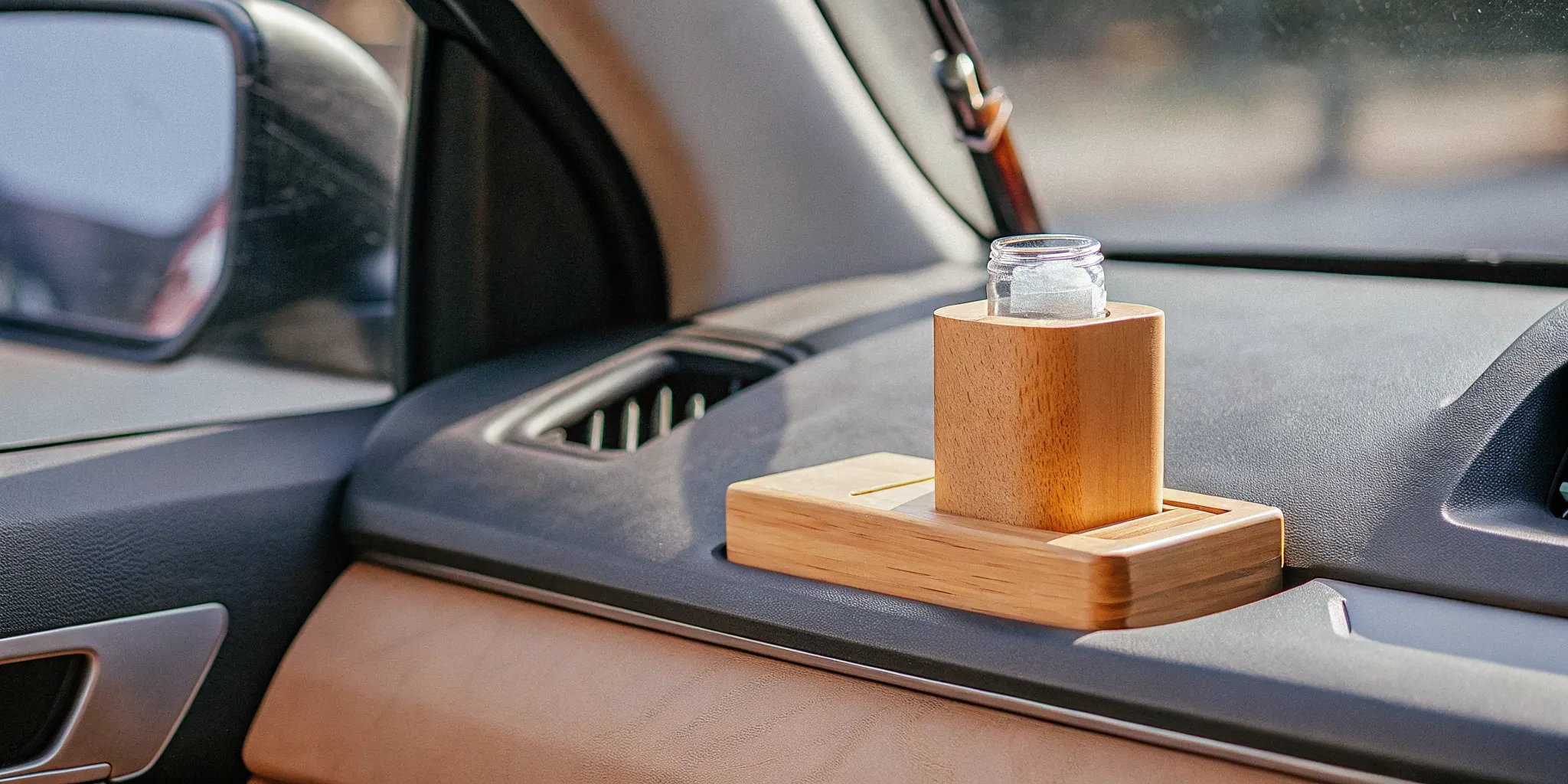
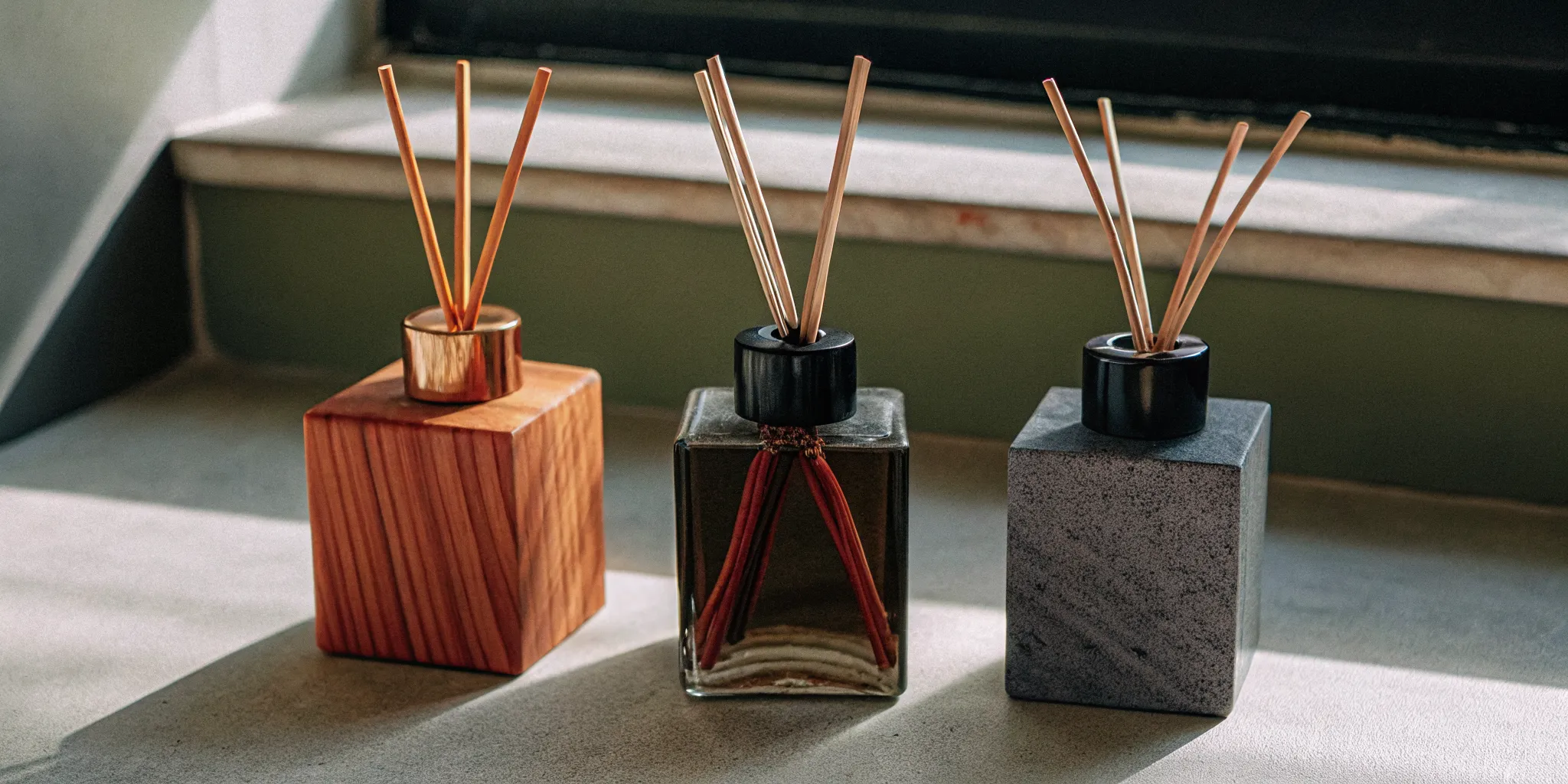
Format matters too. Reusable wood, metal, or stone designs can reduce the cycle of replacing an entire plastic product whenever the fragrance fades. A refillable system separates the lasting object from the consumable scent component. That is a more mindful approach than treating every air freshener as disposable.
Ingredients to avoid in car air fresheners
When comparing car air fresheners, look closely at phthalates, parabens, formaldehyde or formaldehyde-releasing preservatives, and vague fragrance claims. The clearest choice is a brand that names its exclusions and explains its fragrance standards. Specific details matter more than broad words such as "natural" or "green."
Shopping for a cleaner option does not require becoming a chemist. It does require recognizing a few ingredient categories and knowing when to ask for more information. The goal is not to assume every unfamiliar word is harmful. Instead, use transparent standards to avoid products that do not align with your preferences.
| Ingredient or claim | Why shoppers look closer | What to seek instead |
|---|---|---|
| Phthalates | Some shoppers choose to avoid this broad family of chemicals in fragranced products. | A specific phthalate-free fragrance statement. |
| Parabens | These preservatives are on many clean-beauty exclusion lists, even though product formulas and uses vary. | A clear exclusions list and full product guidance. |
| Formaldehyde or formaldehyde-releasing preservatives | A vague ingredient statement can make it difficult to know whether these are present. | Transparent formulation information from the brand. |
| Undisclosed "fragrance" | The single word may not reveal enough to compare one formula with another. | Published fragrance standards and specific exclusions. |
| Overly broad "natural" claims | The claim alone does not explain ingredients, sourcing, or safety standards. | Concrete, verifiable details rather than a front-label promise. |
Phthalates
Phthalates are a family of chemicals used across many product categories. A shopper who wants to avoid them should look for direct wording rather than infer their absence from the word "natural." Drift pairs its car fragrance systems with high-quality, phthalate-free fragrance oils. This gives shoppers a specific standard to use when comparing options.
Parabens and preservatives
Parabens are preservatives, and they are frequently included on consumer clean-product exclusion lists. Not every car fragrance format needs the same type of preservation system. That is one reason it is better to review information for the actual product than rely on a universal assumption. If parabens are important to your decision, look for an explicit statement from the manufacturer.
Formaldehyde and vague formulations
Formaldehyde is another term shoppers commonly want to avoid. The practical lesson is simple: favor brands willing to explain their formulation choices and exclusions. Do not treat a pleasant scent, minimalist package, or botanical picture as proof of what is inside.
How do you choose a cleaner car fragrance?
Choose a cleaner car fragrance by checking specific ingredient exclusions, selecting a controllable delivery format, and considering what must be replaced when the scent fades. Transparent standards and clear directions matter more than vague front-label promises, especially in the compact space of a car cabin.
A reliable shopping process helps you compare products without getting distracted by a long list of scent notes. Use these steps before deciding which fragrance belongs in your car.
- Read beyond the front label. Turn the product over or visit the brand's ingredient and standards pages. Look for specific language about fragrance oils and excluded ingredients.
- Check the delivery format. Decide whether you want a hanging card, spray, vent clip, or reusable diffuser. Consider how easily you can control the intensity in a small cabin.
- Look at the lasting materials. A design made from natural wood, metal, or stone can feel more at home in a considered interior than a disposable plastic container.
- Ask what gets replaced. A refillable system lets you keep the durable component and refresh only the scent element. This can reduce unnecessary waste over time.
- Choose a scent you can live with. The fragrance should complement the drive rather than compete for attention. If you are unsure where to start, take Drift's scent quiz to narrow the options around your preferences.
- Follow all product directions. Use the freshener as intended, keep it away from surfaces where oil could transfer, and adjust or remove it if the scent feels too strong.
Be cautious when the product offers only an emotional promise. Words such as "fresh," "eco," and "plant-inspired" describe a mood, not necessarily a formulation. A credible brand can connect the mood to real standards, useful directions, and a design that gives you control.
Take the Drift scent quiz to find a fragrance direction that fits your drive.
Which non toxic car air freshener format fits your routine?
The best car air freshener format is the one that matches your desired scent control, visual preferences, and replacement routine. Sprays provide immediate control, vent clips respond to airflow, and reusable wood, metal, or stone systems turn the diffuser into a lasting design object.
The right format depends on how you drive, how much scent control you want, and whether you prefer a reusable system. No format is perfect for every person, but their tradeoffs are easy to understand.
Hanging cards
Hanging cards are simple and familiar. They are usually easy to install, but many are designed to be discarded in full after the scent fades. Their visual style can also become a prominent part of the cabin. If you like this format, check the ingredient information and packaging details before buying.
Sprays
Sprays offer immediate control because you decide when and how much to apply. That same flexibility can make it easy to overdo the fragrance in a closed car. Follow the directions, use a light hand, and avoid spraying onto sensitive interior surfaces.
Vent clips
Vent clips use airflow to distribute scent. They can be convenient, though the experience may change with fan speed, heat, and placement. Look for a design that lets you moderate intensity rather than forcing a constant strong release.
Reusable wood, metal, and stone systems
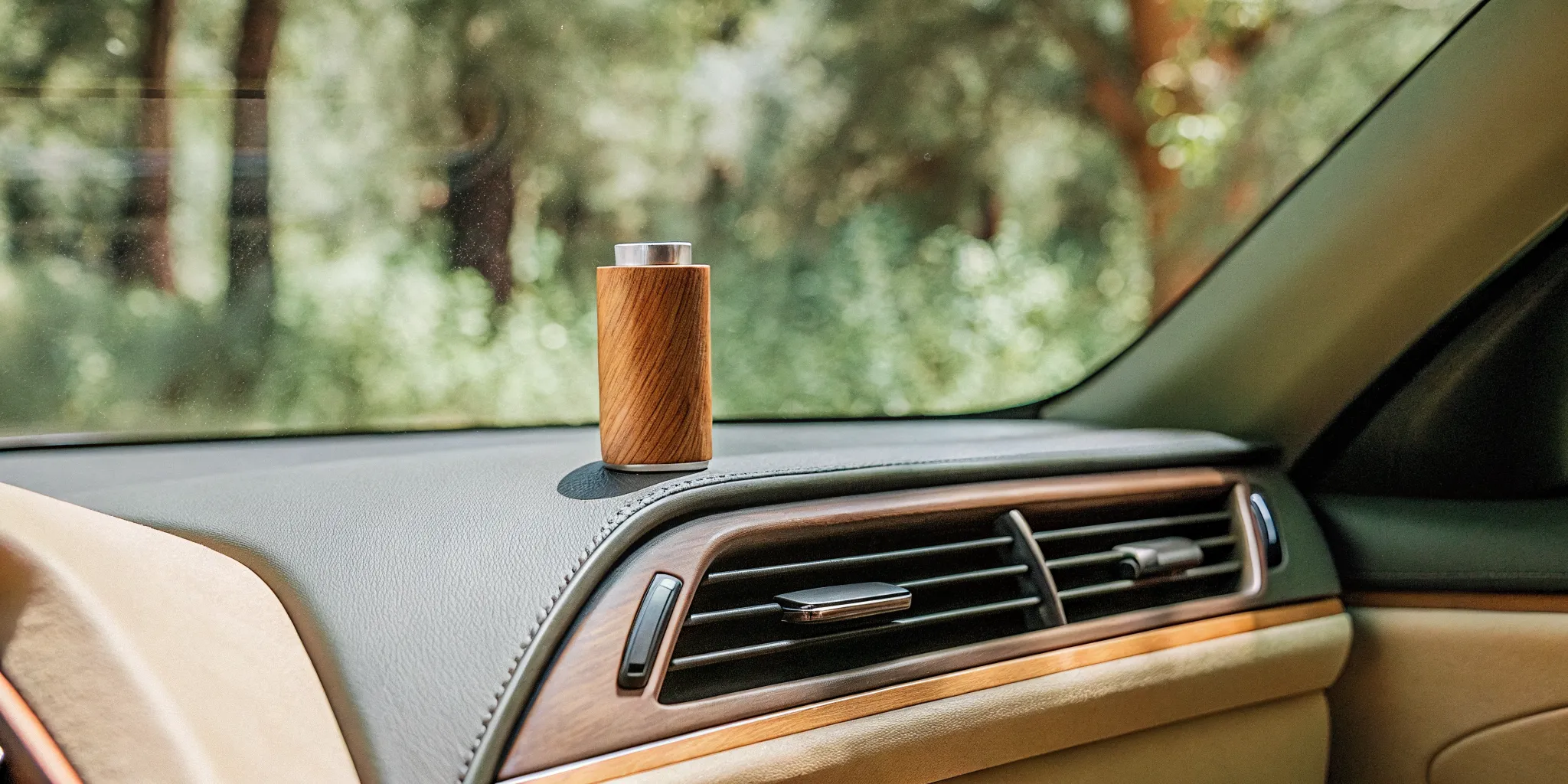
A reusable diffuser treats car fragrance more like a lasting design object. Drift's car fresheners use natural materials such as wood and metal, with phthalate-free fragrance oils and refill options. The result is meant to look intentional in the cabin while delivering a clean, subtle scent.
This format also makes the replacement cycle easier to understand. Instead of discarding the entire object, you can refresh the fragrance component. For drivers who care about both aesthetics and repeat use, that distinction can be as important as the scent itself.
A more considered way to scent your car
Your car is part of everyday life: a place for the morning commute, school pickup, weekend errands, and long stretches of open road. Fragrance can shape how that space feels, but it works best as a quiet layer. Drift approaches car scent with the same attention you might give to another detail in a well-designed interior.
The brand combines minimalist, refillable systems with natural materials and high-quality, phthalate-free fragrance oils. Signature scents draw inspiration from nature, travel, and mood, creating options that feel more like personal fragrance for a space than a novelty air freshener. A flexible monthly subscription can keep fresh refills arriving without requiring you to replace the durable holder.
Choose fragrance by feeling, not just by name
Scent descriptions can be difficult to translate through a screen. Instead of choosing only because a note sounds familiar, think about the atmosphere you want. Do you want the drive to feel crisp, grounded, warm, or bright? The scent quiz can help connect that mood with a fragrance direction.
You can also carry a consistent scent sensibility beyond the road. Drift's home fragrance collection extends the idea of clean, considered scent into more parts of daily life. The objective is not to make every space smell intense. It is to create subtle continuity that feels personal.
How to keep your car fresh without over-scenting it
Even the best non toxic car air freshener cannot replace cleaning. Fragrance should be the finishing layer after you address the source of unwanted odors. A simple maintenance routine will make a subtle scent feel more effective.
- Remove the source first. Take out food packaging, damp gear, and anything else that can create a persistent smell.
- Vacuum soft surfaces. Floor mats, seats, and cargo areas collect debris that can hold odors.
- Wipe frequently touched areas. Clean cupholders and other appropriate surfaces using products suited to your vehicle's materials.
- Manage moisture. Dry wet mats and investigate recurring dampness rather than covering the smell with more fragrance.
- Air out the cabin. Fresh airflow can reset the space before you add scent.
- Start subtle. Install or activate your freshener according to its directions, then give it time before increasing intensity.
This approach keeps fragrance in its proper role. It adds character to a clean cabin rather than masking a problem. When the scent begins to fade, refresh the refill or replace the scent component according to the product instructions instead of adding multiple air fresheners at once.
Frequently asked questions
Are car air fresheners toxic?
Car air fresheners use many different formulas and formats, so one answer does not apply to every product. Review the manufacturer's ingredient standards, exclusions, and directions. If you want to avoid a specific ingredient category, choose a product that explicitly addresses it rather than relying on a broad "natural" claim.
Are essential oils always safe in a car air freshener?
Natural origin does not automatically make every oil or use appropriate for every person, pet, or surface. Follow the product directions and consider the needs of everyone who regularly rides in the car. Avoid improvised applications that could spill or damage interior materials.
What is the best natural way to make a car smell good?
Begin by removing trash, vacuuming, drying damp materials, and airing out the cabin. Then add a subtle fragrance using a clearly labeled product that matches your ingredient and material preferences. Cleaning first helps prevent the scent from merely covering an underlying odor.
How long should a car air freshener last?
Longevity varies with the format, weather, airflow, fragrance, and how the product is used. Review the brand's directions and replacement guidance. A refillable system can make it easier to refresh the scent without replacing the entire diffuser.
How can I make a car fragrance less intense?
Use any built-in intensity control, reduce airflow around a vent-based format, or remove the freshener temporarily according to its directions. Do not add multiple scent products at once. In a compact cabin, a lighter fragrance usually creates a more comfortable experience.
Find a scent made for the way you drive
A cleaner car fragrance choice brings together ingredient standards, thoughtful materials, and a scent that never needs to shout. Start with the details you can verify, choose a reusable format that fits your routine, and let fragrance be the final touch in a genuinely fresh cabin.
Explore Drift car fresheners and choose a subtle, design-forward fragrance for your daily drive.
Related posts